This is paragraph text. Click it or hit the Manage Text button to change the font, color, size, format, and more. To set up site-wide paragraph and title styles, go to Site Theme.
New Paragraph
This is paragraph text. Click it or hit the Manage Text button to change the font, color, size, format, and more. To set up site-wide paragraph and title styles, go to Site Theme.
If you’ve heard the term “ADU” floating around in real estate conversations or city planning meetings, you’re not alone. ADUs, short for Accessory Dwelling Units, are becoming a popular solution to rising housing costs, aging-in-place strategies, and multi-generational living. But what is an accessory dwelling unit, exactly? And how does building an ADU add value to your property?
In this guide, we’ll cover everything you need to know; from what ADUs are and why they matter to how the ADU construction process works in places like St. Augustine, FL.
What Does ADU Stand For?
ADU stands for Accessory Dwelling Unit. It’s a secondary residential unit on a single-family lot. These units can be attached to the main house, located above a garage, or built as standalone backyard cottages. They’re also called:
- Granny flats
- In-law suites
- Backyard cottages
- Carriage houses
- Secondary suites
Regardless of the name, they all serve the same purpose: to provide additional, self-contained living space on an existing property.
What Is an Accessory Dwelling Unit?
An accessory dwelling unit is a complete, independent housing structure located on the same lot as a primary residence. It has its own entrance, kitchen, bathroom, and living space.
Some ADUs are converted garages or basements, while others are custom-built from the ground up. In most cases, they’re smaller than the main house, often between 400 and 1,200 square feet.
What Is an ADU in Real Estate?
In real estate, an ADU is considered an income-generating asset and a property value booster. Whether you’re looking to rent it out long-term, use it as a guest suite, or house a family member, it expands the usability and appeal of your home.
Buyers are increasingly looking for homes with ADU potential, especially in urban areas where space is limited and housing demand is high. From a resale perspective, ADUs offer flexibility that’s hard to match.
What Is ADU Housing Used For?
ADU housing is extremely versatile. Homeowners use them for:
- Rental income: Long-term or short-term tenants
- Multigenerational living: Parents, in-laws, or adult children
- Guest accommodations: A private, hotel-like space
- Home offices or studios: With separate entrances and quiet zones
- Aging in place: Letting seniors stay close to family
ADUs provide livable square footage without the hassle of moving or upsizing.
Why Are ADUs Becoming More Popular?
There are a few reasons why ADUs are on the rise:
- Affordability: They help create lower-cost housing in cities where prices are soaring.
- Zoning updates: Many municipalities have updated local codes to allow ADU construction.
- Flexibility: Homeowners want more options for income, privacy, and family care.
- Land use efficiency: ADUs make the most of existing lots without urban sprawl.
In places like St. Augustine and across Florida, ADU-friendly policies are opening doors for more homeowners to take advantage of these small but mighty spaces.
Types of ADUs
ADUs come in several forms. Each has different zoning and construction requirements:
1. Detached ADUs
A completely separate structure. Think a small cottage or guest house in the backyard.
2. Attached ADUs
Connected to the main home, often with a shared wall but private entrance.
3. Above-Garage ADUs
Located above a detached garage, maximizing vertical space.
4. Garage Conversions
Existing garages transformed into livable dwellings.
5. Basement or Interior Conversions
Finished basements or internal space repurposed into standalone units.
Building an ADU: The Key Benefits
Here are just a few reasons homeowners are building ADUs today:
- Boost your property value: An ADU can significantly raise your home’s appraisal value.
- Earn passive income: Rent it out and supplement your mortgage.
- Support family needs: Give loved ones their own space while staying nearby.
- Maximize your lot: Use underutilized areas of your property wisely.
- Plan for retirement: Live in the ADU and rent out your main home.
How to Build an ADU: Step-by-Step
So, how do you get started with ADU construction? Here’s what the process typically looks like with a skilled builder like First Coast Construction USA:
Step 1: Property Evaluation
We assess your lot to ensure it meets local ADU eligibility standards (setbacks, size limits, etc.).
Step 2: Design Planning
Choose a layout, square footage, and function. We help you design an ADU that fits your goals and your budget.
Step 3: Permitting and Zoning
We handle the local approvals. In St. Augustine, FL, ADU permits require attention to height, parking, and unit size.
Step 4: Site Prep and Utilities
Before we build, we prep the lot and coordinate utility connections for water, sewer, and electric.
Step 5: Construction
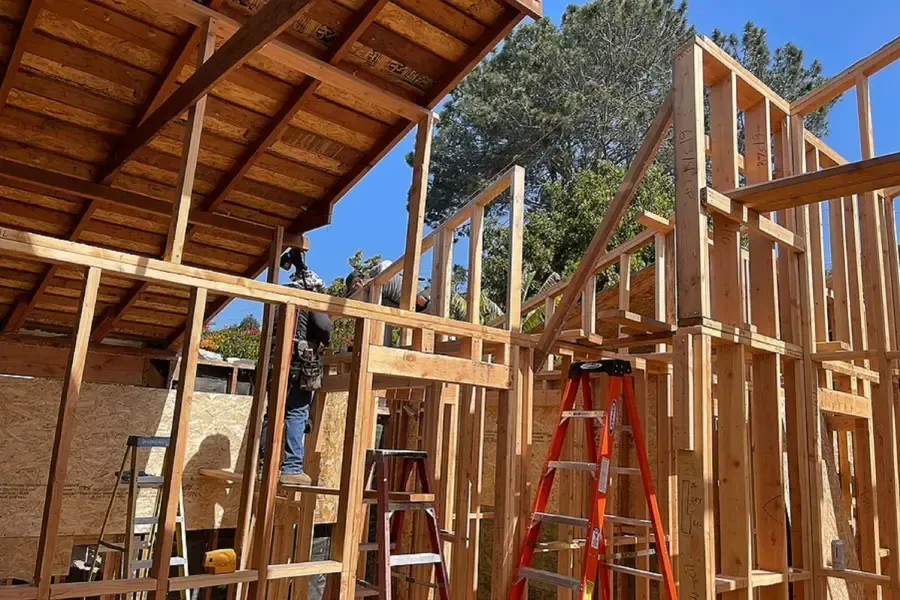
From foundation to finishes, our hands-on team builds your ADU with high-quality materials and transparent timelines.
Step 6: Final Inspection and Move-In
Once it’s complete and approved, your new ADU is ready to live in, rent, or host guests.
ADU Construction Process in St. Augustine, FL
Every city has different rules, and St. Augustine, FL, is no exception. At First Coast Construction USA, we help clients navigate the local process, including:
- Lot size requirements
- Setback and height restrictions
- Parking stipulations
- Utility hook-up approvals
- Zoning compliance and code adherence
We’re familiar with city ordinances and permit timelines, so your project moves smoothly from planning to final inspection.
What to Consider Before Building an ADU
Thinking about building an ADU on your property? Here are a few important things to keep in mind:
- Budget: Costs can range from $60,000 to $250,000 depending on size and finish.
- Financing: Consider HELOCs, construction loans, or ADU-specific lending programs.
- Design preferences: Do you want it to match your home? Include a full kitchen? Be wheelchair accessible?
- Rental goals: Will you rent short-term, long-term, or not at all?
- HOA regulations: Not all neighborhoods allow ADUs.
Our team walks you through every factor to help you make informed, confident decisions.
Why Work with First Coast Construction USA?
We’re not a massive firm with layers of overhead. We’re a local, hands-on team that knows how to build quality ADUs without overcomplicating the process. Our clients choose us because:
- We handle permits and red tape for you
- We build with efficiency, integrity, and budget in mind
- We design ADUs that add real value, not just square footage
- We keep you in the loop from day one to move-in day
Whether you’re building an ADU for income or independence, we’re here to make it easy.
Final Thoughts: Is an ADU Right for You?
If you’re asking yourself, “What is an accessory dwelling unit, and should I build one?” The answer depends on your goals. ADUs are a smart, flexible investment whether you’re trying to house loved ones, build equity, or generate passive income.
With a partner like First Coast Construction USA by your side, you don’t have to go it alone. We help you plan, permit, and build your ADU with professional guidance every step of the way.
Ready to Get Started?
Looking to add more livable space to your property with a smart, long-term investment? Let’s talk about your ADU goals. Contact First Coast Construction USA in St. Augustine, FL at 904-400-3121 and get a free consultation on your accessory dwelling unit project today.